


What is the power supply requirement for a Transformer Short - circuit Impedance Tester?
As a supplier of Transformer Short - circuit Impedance Testers, I often receive inquiries regarding the power supply requirements for these essential testing devices. Understanding the power supply needs is crucial for ensuring the proper functioning and accuracy of the tester, as well as the safety of the operators and the equipment itself. In this blog post, I will delve into the power supply requirements for a Transformer Short - circuit Impedance Tester, providing you with the necessary information to make informed decisions when using or purchasing such a device.
1. Voltage Requirements
The voltage requirements of a Transformer Short - circuit Impedance Tester can vary depending on the model and the specific application. Most testers are designed to operate within a certain voltage range, which is typically specified by the manufacturer. Common voltage ranges for these testers include 110V - 120V for regions using the North American electrical system and 220V - 240V for regions using the European or Asian electrical systems.
It is essential to ensure that the power supply voltage matches the requirements of the tester. Using a voltage that is too high can damage the internal components of the tester, while using a voltage that is too low may result in inaccurate test results or prevent the tester from functioning properly. Some advanced testers are equipped with automatic voltage adjustment features, which can adapt to different power supply voltages within a certain range. However, it is still recommended to double - check the voltage compatibility before connecting the tester to the power supply.
2. Frequency Requirements
In addition to the voltage, the frequency of the power supply also plays a significant role in the operation of a Transformer Short - circuit Impedance Tester. The standard power supply frequencies around the world are 50Hz and 60Hz. Most testers are designed to work with either 50Hz or 60Hz power supplies, and some can even operate with both frequencies.

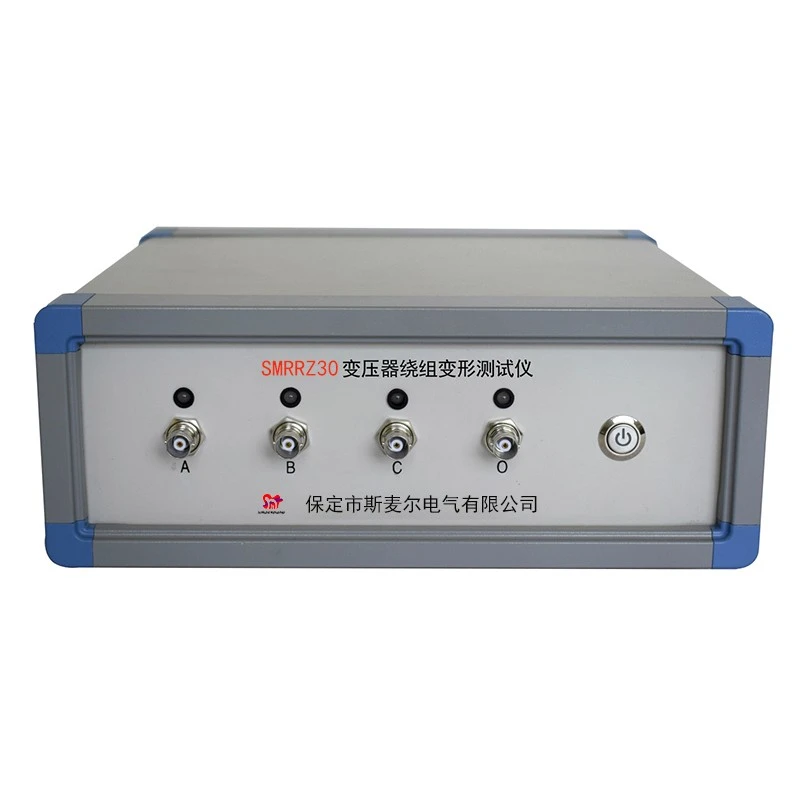
The frequency of the power supply affects the performance of the tester, especially when it comes to measuring the impedance of transformers. Transformers are designed to operate at specific frequencies, and the impedance measurements can be affected by the frequency of the test signal. Therefore, it is important to ensure that the power supply frequency matches the frequency requirements of the tester and the transformer being tested. Using a power supply with an incorrect frequency can lead to inaccurate impedance measurements and may affect the overall evaluation of the transformer's performance.
3. Power Capacity
The power capacity of the power supply is another important consideration. The Transformer Short - circuit Impedance Tester requires a certain amount of power to operate, especially when conducting short - circuit impedance tests. During a short - circuit test, the tester needs to supply a high - current test signal to the transformer, which requires a power supply with sufficient capacity.
The power capacity of the tester is usually specified in terms of volt - amperes (VA) or watts (W). It is important to choose a power supply that can provide enough power to meet the requirements of the tester. If the power supply capacity is insufficient, the tester may not be able to generate the required test current, resulting in inaccurate test results or even damage to the tester.
4. Power Quality
The quality of the power supply also has a significant impact on the performance of the Transformer Short - circuit Impedance Tester. A stable and clean power supply is essential for accurate and reliable test results. Power fluctuations, voltage sags, and electrical noise can all affect the operation of the tester and lead to inaccurate measurements.
To ensure the power quality, it is recommended to use a power conditioner or a uninterruptible power supply (UPS) when connecting the tester to the power grid. A power conditioner can filter out electrical noise and regulate the voltage, while a UPS can provide backup power in case of a power outage, ensuring the continuous operation of the tester.
5. Safety Considerations
Safety is always a top priority when dealing with electrical equipment. When connecting the Transformer Short - circuit Impedance Tester to the power supply, it is important to follow all safety procedures. Make sure that the power supply is properly grounded to prevent electrical shock. Use appropriate electrical cables and connectors that are rated for the voltage and current requirements of the tester.
Before starting the test, visually inspect the power supply and the tester for any signs of damage or wear. If any issues are found, do not use the equipment until the problems are resolved. Additionally, it is recommended to wear appropriate personal protective equipment (PPE), such as insulated gloves and safety glasses, when operating the tester.
Related Products
As a supplier, we also offer a range of related testing instruments, such as the Handheld Loop Resistance Tester, Transformer Ratio Tester, and Transformer Winding Deformation Tester. These instruments can complement the Transformer Short - circuit Impedance Tester and provide a comprehensive solution for transformer testing and maintenance.
Conclusion
In conclusion, understanding the power supply requirements for a Transformer Short - circuit Impedance Tester is essential for ensuring its proper operation, accuracy, and safety. By paying attention to the voltage, frequency, power capacity, power quality, and safety considerations, you can maximize the performance of the tester and obtain reliable test results.
If you are in the market for a Transformer Short - circuit Impedance Tester or any of our related products, we invite you to contact us for more information and to discuss your specific requirements. Our team of experts is ready to assist you in finding the most suitable testing solution for your needs.
References
- Electrical Safety Standards for Testing Equipment.
- Manufacturer's Manuals for Transformer Short - circuit Impedance Testers.
- Industry Guidelines for Transformer Testing and Maintenance.


