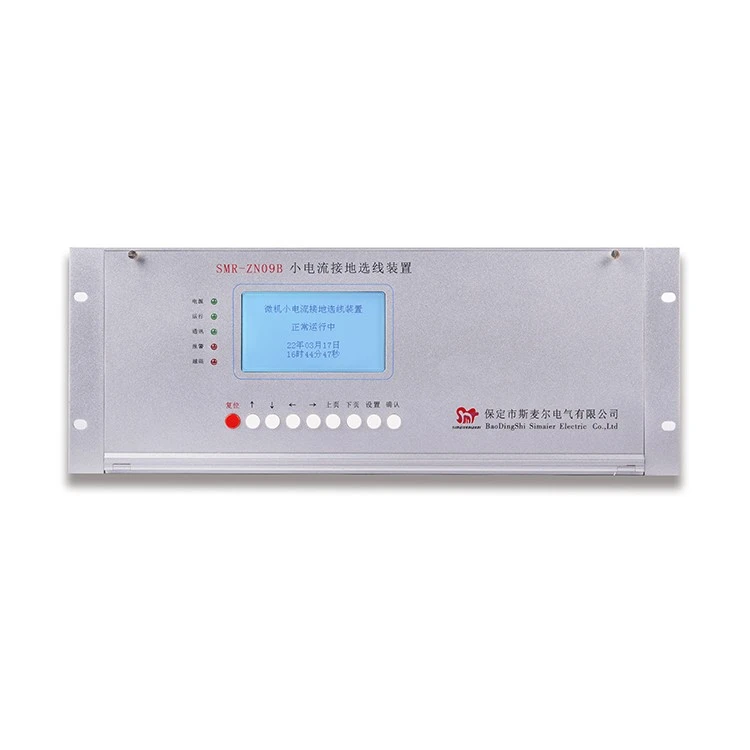
We sell power-quality monitors through our own cross-border store. Intermittent arc grounding is the fault I like working on, and the one that makes most locators look bad. The arc burns a few cycles, quits, restrikes after some random delay. Steady zero-sequence current starts to build and gets cut off. A threshold-based scheme calls that a transient and filters it out. Wrong reflex, in my view. The fault isn't small. It's slippery. So when I spec a locator, I start with one question: can it show the fault came back more than once, and can it put those returns on a section before the fault settles? If it can't do both, the spec sheet doesn't impress me.
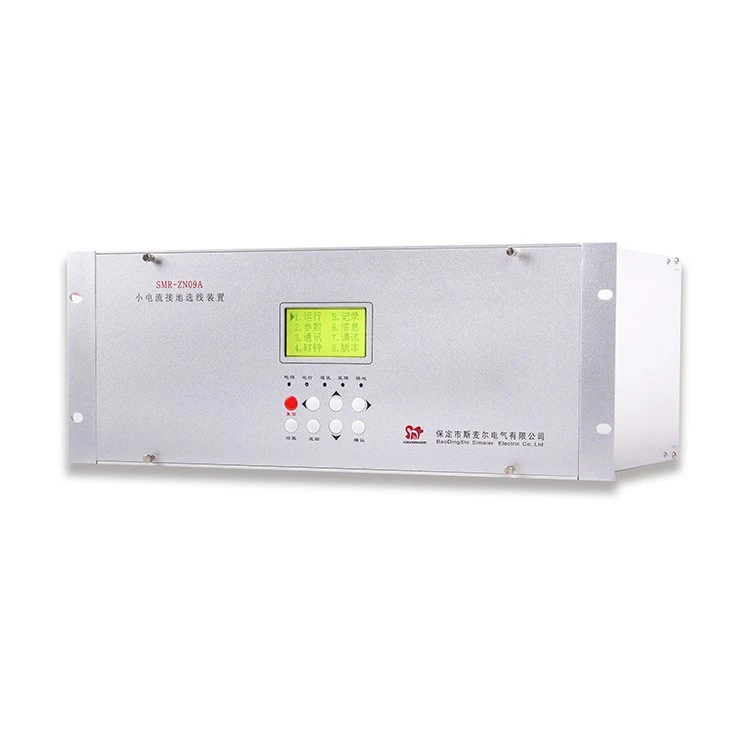
Transient zero-sequence current is what I go after. Every restrike snaps the arc conductance, and that snap fires a high-frequency transient on the zero-sequence loop. Usually much bigger than the steady current. High arc resistance and a short burn don't necessarily bury it. What I trust more is the two sides of the fault. Transient current on one side runs opposite to the other, or the waveforms don't line up. Healthy section, both ends look alike. That polarity feature repeats on every restrike, so the arc going quiet between events doesn't wipe it. That's the handle. No handle, no section call.
The front end has to earn that handle, and that costs money and board space. Wide frequency range, real dynamic range, no saturation when a restrike hits out of nowhere. Sampling across terminals needs a common time base. Skip it and polarity comparison drifts, and you'll be chasing a ghost during commissioning. CT and PT input options matter because no two sites look alike. Event log and waveform capture with pre- and post-trigger windows. Sounds like spec-sheet filler. It isn't. It's what lets an operator sit down hours later, after the arc has gone quiet, and reconstruct what happened. If CT accuracy is marginal or a connection is loose, I want the unit to flag data quality, not hand out a confident wrong answer. A wrong section call costs a crew a day.
One transient tells you almost nothing. After the fault picks up, the locator holds a window open and watches for repeats. The method I reach for first counts how many times the cycle-difference energy of zero-sequence voltage crosses the limit within several cycles after the first. Pass the setting, it's intermittent arc grounding. Not a single transient. Not a capacitor bank switching event. Another method combines cumulative fault duration with zero-sequence current amplitude characteristics. That one earns its keep in flexible grounding systems, where zero-sequence overcurrent protection simply won't operate on intermittent faults. Different methods, same bet: the intermittent part is a time pattern you can measure. The fault doesn't have to be there the whole time. It has to leave repeated traces inside the window. Set the window too short and you miss repeats. Too long and switching events pile in. I start conservative and tune on site.
Interference is where I get picky. Capacitor bank switching and load connection can put zero-sequence current right in the same magnitude range as a high-resistance intermittent arc fault. Amplitude alone won't give you a threshold you can trust. You'd be guessing, and guessing gets people hurt. So I don't chase one perfect criterion. Transient energy, polarity relationship, waveform similarity, event timing. Stack them. A load-switching transient doesn't show the same sustained opposite relationship across the fault, and its decay rhythm feels different from the random gaps between restrikes. Multi-feature fusion or a classification model pulls arc events apart from switching disturbances. Traveling-wave methods? I'll use them as a sidekick, not the hero. Random restrikes make the initial traveling wave a pain to trigger and capture reliably. In distribution networks, that's just how it is.
On the operations side, I want the unit livable. Local indication you can read at the switchgear without a flashlight and a prayer. Remote event viewing that saves a drive. Time-stamped records and report export for handoff. Firmware updates that don't need a truck roll for every small tweak. Different grounding modes, thresholds settable during commissioning. Data-quality checks so a bad CT or a loose connection doesn't get mistaken for a fault. SCADA or protection-system integration. The locator isn't replacing the relay. It's handing the operator a section-level answer the relay may not be set up to give. I'd rather say that plainly than dress it up.
Limits are real and I won't pretend otherwise. High-resistance intermittent arcs in a noisy background can still slip through. When that risk is there, a data-quality warning beats a forced report every time. Settings depend on the site: CT and PT configuration, grounding mode, how much switching activity is around. I'd rather the device admit uncertainty than send a crew to the wrong section. That costs us a sale sometimes. I'm fine with that.
What comes out is a section-level finding, not an instant "ground fault happening right now" alarm. It says a line section had repeated transient events matching intermittent arc characteristics inside the monitoring window. The fault can go quiet between restrikes. It can't drop out of the record. Time, amplitude, and direction features get logged for each event, and over time those scattered restrikes turn into a conclusion the crew can act on. Steady-state protection waits for the fault to settle. This doesn't. It narrows the section while the fault is still misbehaving. That's the only time the answer helps anyone.